
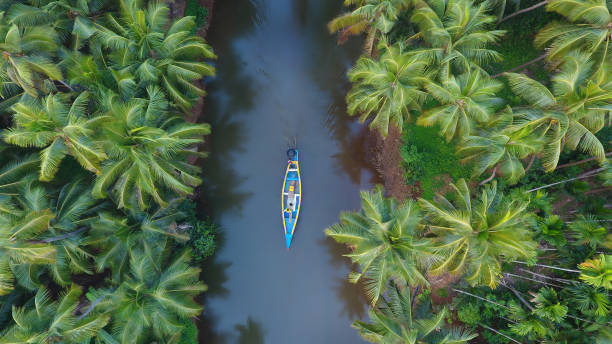
Responsible Backwater Tourism in Kerala: A Local Value Chain Perspective
Share this article
Responsible Backwater Tourism in Kerala: A Local Value Chain Perspective
A backwater journey in Kerala may look simple from a visitor’s seat: a boat moves across a lake, lunch is served, and villages drift past the deck. But the experience depends on a much larger system. Boat owners, crew members, cooks, farmers, guides, repair workers, local authorities and nearby communities all shape what visitors see and what tourism leaves behind.
That makes backwater tourism more than a scenic product. It is also a local value chain. The industry’s long-term strength depends on whether visitor spending supports the destination, whether daily operations respect waterways and village life, and whether the experience remains worthwhile for residents as well as guests.
Tourism Value Is Created Beyond the Boat
A houseboat booking can create work for crew members, cooks, cleaners, boat builders and maintenance teams. It can also generate demand for vegetables, fish, spices, transport, handicrafts and other services. The more of this spending that reaches people and businesses in the destination, the more tourism becomes part of the local economy rather than a product operating beside it.
Kerala’s Responsible Tourism Mission identifies local employment, local procurement, women’s empowerment, community-level tourism and environment-friendly practices among its objectives. The policy direction points to an important question for operators: how can a visitor’s booking connect more directly with people who live and work around the backwaters?
There is no single answer. A boat may source some ingredients locally; a guide may introduce guests to a village’s history; a short canoe trip may involve a different set of local workers than an overnight cruise. The practical task is to make these relationships clear, fair and dependable.
The Environmental Side of the Experience
Backwaters are working landscapes, not scenery reserved for tourism. People travel, fish, farm and earn a living around these waterways. Boats, kitchens and visitor services therefore need to consider waste, wastewater, fuel, noise and congestion. Even small operational choices matter when many providers share a limited waterway.
Environmental responsibility should be specific rather than a slogan. Operators can explain how they handle onboard waste, what happens to wastewater, how they maintain boats and how they brief guests about local surroundings. Destination managers can help by coordinating routes, facilities and standards across different providers.
Visitors also have a role. Carrying reusable items, avoiding litter, following crew instructions and being considerate when photographing people are modest actions, but they help set the tone of the experience. Respectful travel is not a substitute for good operating practices; both are needed.
Spread the Benefits Without Spreading Pressure
Popular departure points and familiar routes naturally attract attention. Concentrating too many visitors in the same places, however, can increase pressure on local infrastructure and limit the number of people who benefit from tourism. A wider range of well-managed experiences may create more opportunities for residents, provided that new routes and activities are developed with community input and environmental limits in mind.
This does not mean that every quiet canal should become a tourist route. The aim is not to expand activity everywhere. It is to make choices that suit the place: some areas may be appropriate for boat trips, while others may be better protected from additional visitor traffic. Local knowledge is essential when deciding the difference.
Kerala’s Responsible Tourism Mission has described destination planning that connects tourism with local food, livelihoods, culture and water-based activities. That approach treats the destination as a network of people and places, rather than a single attraction.
What Visitors Can Look for When Comparing Experiences
Clear information helps travellers choose an experience that fits their needs and helps responsible operators explain what they provide. Before booking, visitors can compare:
• Duration and route: how long the cruise lasts and what the schedule includes.
• Boat and group size: whether the experience is private or shared, and how many guests it is designed for.
• Inclusions: meals, accommodation, crew, transfers and any additional charges.
• Safety information: the equipment and guidance provided, especially for water-based activities.
• Local connections: whether the operator can explain how the experience involves local crew, suppliers or guides.
• Environmental practices: what the operator can clearly say about waste and care for the waterways.
For example, Backwater Holidays’ Alleppey houseboat packages let travellers compare options by duration and comfort level
This page is a reference for the kind of practical information a booking page can provide; it is not an independent assessment of an operator’s environmental performance. The same questions should be asked of any provider.
Measure Outcomes, Not Just Visitor Numbers
Arrivals and bookings are easy to count, but they do not show the whole health of a destination. A more useful industry view also asks who received the income, whether local procurement grew, whether workers had stable and safe conditions, how visitor activity affected daily life, and whether waste and waterway management kept pace.
These measures need cooperation. Operators can share transparent information about their own practices. Local businesses and community groups can describe which tourism links are working and where benefits are missing. Public agencies can coordinate infrastructure, visitor management and environmental standards. No single participant can solve every destination-level challenge alone.
A Stronger Future for Kerala’s Backwater Industry
Kerala’s backwaters are valuable partly because they are lived-in places with working communities, distinctive landscapes and long-standing connections to water. Tourism can support that character when local people have a meaningful role in the value chain and when business growth respects the limits of the environment.
The industry’s next step is not simply to sell more cruises. It is to make each experience clearer, better connected to local livelihoods and more careful about its effects. Visitors benefit from a richer journey, businesses build trust, and the destination has a better chance of remaining a place where people want to live as well as travel.