
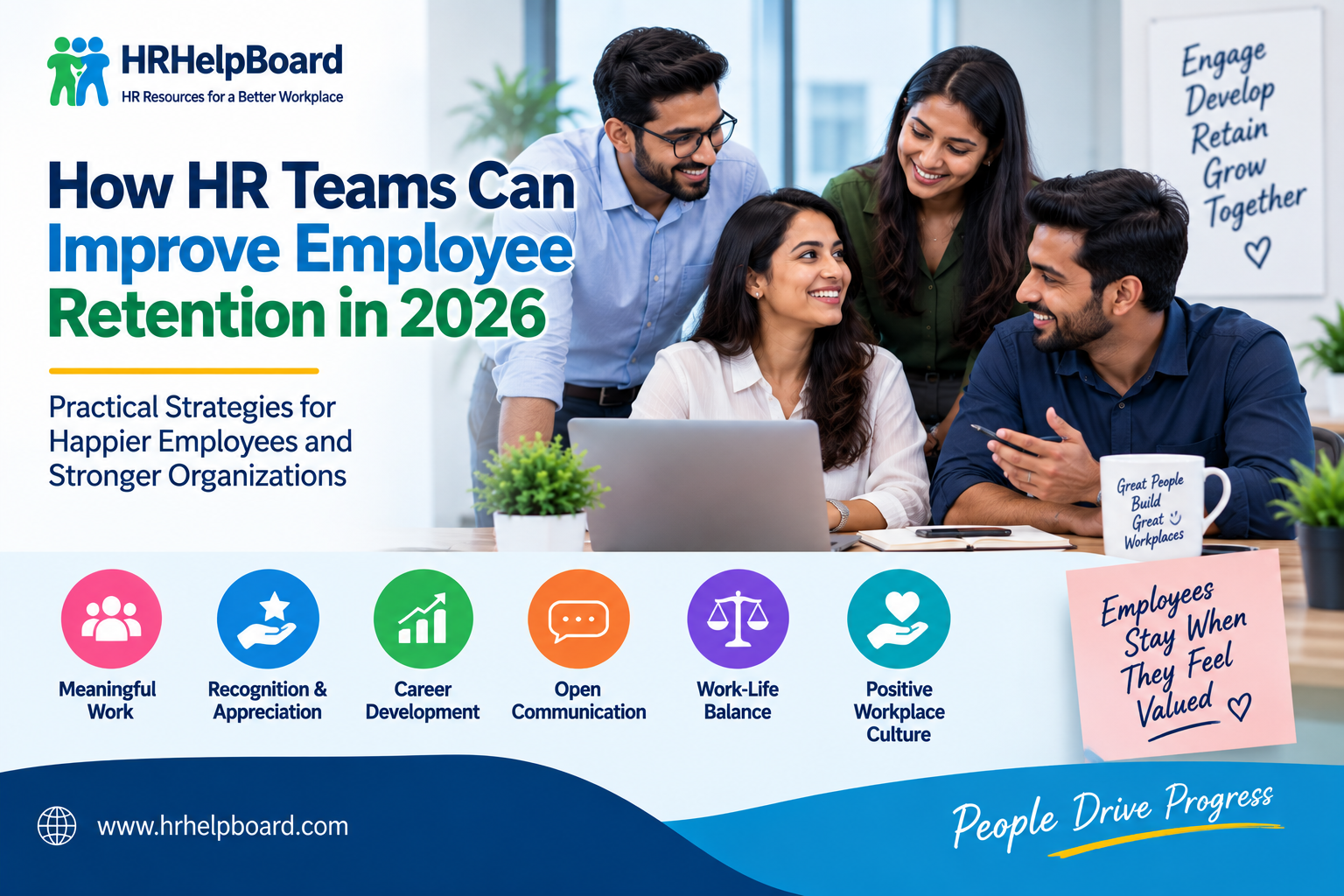
How HR Teams Can Improve Employee Retention in 2026
Share this article
How HR Teams Can Improve Employee Retention in 2026
Employee retention remains an important priority for organizations in 2026. Hiring the right people is only the first step. Companies also need to create a workplace where employees feel valued, supported, recognized, and able to grow.
High employee turnover can affect productivity, team morale, customer relationships, and organizational knowledge. HR teams can help reduce avoidable turnover by understanding employee expectations and creating practical retention strategies.
1. Create Meaningful Work
Employees are more likely to remain engaged when they understand how their work contributes to organizational goals.
HR teams can encourage managers to:
Clearly communicate job responsibilities and expectations.
Connect individual goals with business objectives.
Give employees opportunities to take ownership of projects.
Provide meaningful responsibilities rather than repetitive tasks whenever possible.
When employees see purpose in their work, they can develop a stronger connection with the organization.
2. Recognize and Appreciate Employees
Recognition does not always have to involve financial rewards. A genuine thank-you, public appreciation, achievement award, or message from a manager can make employees feel valued.
Organizations can introduce:
Employee recognition programs
Monthly or quarterly appreciation initiatives
Peer-to-peer recognition
Achievement certificates
Manager appreciation messages
Rewards for exceptional contributions
Consistent recognition can help create a workplace culture where employees understand that their efforts are noticed.
3. Provide Career Development Opportunities
Career growth is an important consideration for employees who want to build their professional future within an organization.
HR teams can support retention by providing:
Training and development programs
Mentoring opportunities
Internal job opportunities
Leadership development
Skill-building workshops
Individual development plans
Employees should also have conversations with their managers about their career goals and the skills required to progress.
4. Encourage Open Communication
Poor communication can create frustration and disconnect employees from the organization. HR teams can establish channels where employees can comfortably share suggestions, concerns, and feedback.
Regular employee surveys, one-to-one meetings, town halls, feedback sessions, and anonymous feedback mechanisms can help organizations understand workplace concerns.
The important part is to act on meaningful feedback. Asking employees for their opinions without addressing recurring concerns can reduce trust.
5. Support Work-Life Balance
Employees increasingly expect organizations to recognize the importance of maintaining a sustainable balance between professional and personal responsibilities.
Depending on the nature of the job, organizations can consider:
Flexible working arrangements
Reasonable workloads
Flexible scheduling
Adequate leave policies
Employee wellness initiatives
Clear expectations around working hours
HR teams should also monitor workload and employee burnout indicators rather than treating retention only as a compensation issue.
6. Build a Positive Workplace Culture
Workplace culture has a direct influence on how employees experience their jobs. A culture based on respect, inclusion, collaboration, fairness, and professional behavior can contribute to stronger employee relationships.
HR can reinforce positive culture through:
Clear workplace policies
Leadership training
Fair performance management
Employee engagement activities
Team-building initiatives
Respectful workplace practices
Managers are particularly important because employees often experience organizational culture through their immediate supervisors.
7. Improve Manager-Employee Relationships
Employees may enjoy their organization but still leave because of poor relationships with managers. HR teams can therefore provide managers with training on communication, coaching, conflict resolution, feedback, and employee recognition.
Managers should regularly discuss performance, challenges, career objectives, and development needs with their team members.
A manager who listens and provides constructive support can make a significant difference to the employee experience.
8. Review Compensation and Benefits
Competitive compensation remains an important component of employee retention. HR teams should periodically review salaries and benefits against relevant industry and geographic benchmarks.
Retention strategies may include:
Fair salary structures
Performance-based incentives
Health and wellness benefits
Paid leave
Retirement benefits
Learning benefits
Flexible benefits where appropriate
Compensation alone may not guarantee retention, but employees can become dissatisfied when they perceive significant gaps between their contribution and their rewards.
9. Use Employee Feedback to Identify Retention Risks
HR teams can use employee surveys, exit interviews, engagement data, absenteeism trends, and retention metrics to identify recurring issues.
For example, if employees frequently mention limited career opportunities during exit interviews, HR can investigate internal mobility and development programs.
The goal should be to identify patterns rather than relying on individual assumptions.
10. Make Employee Experience a Continuous Process
Employee retention should not be treated as an activity that begins only when an employee submits a resignation. It should be part of the complete employee lifecycle.
HR teams can review the employee experience across:
Recruitment → Onboarding → Development → Performance Management → Recognition → Career Growth → Retention
This approach allows HR professionals to identify areas where employees may become disengaged and introduce improvements before problems become serious.
Conclusion
Employee retention in 2026 requires more than offering attractive salaries. Employees want meaningful work, recognition, career opportunities, open communication, supportive management, work-life balance, and a positive workplace culture.
HR teams can strengthen retention by regularly listening to employees, analyzing workplace feedback, supporting managers, and continuously improving the employee experience.
Organizations that make employees feel respected and valued can create stronger workplace relationships while building a more stable and engaged workforce.
Tags